Basement Flooding Cleanup in Woodstock, GA
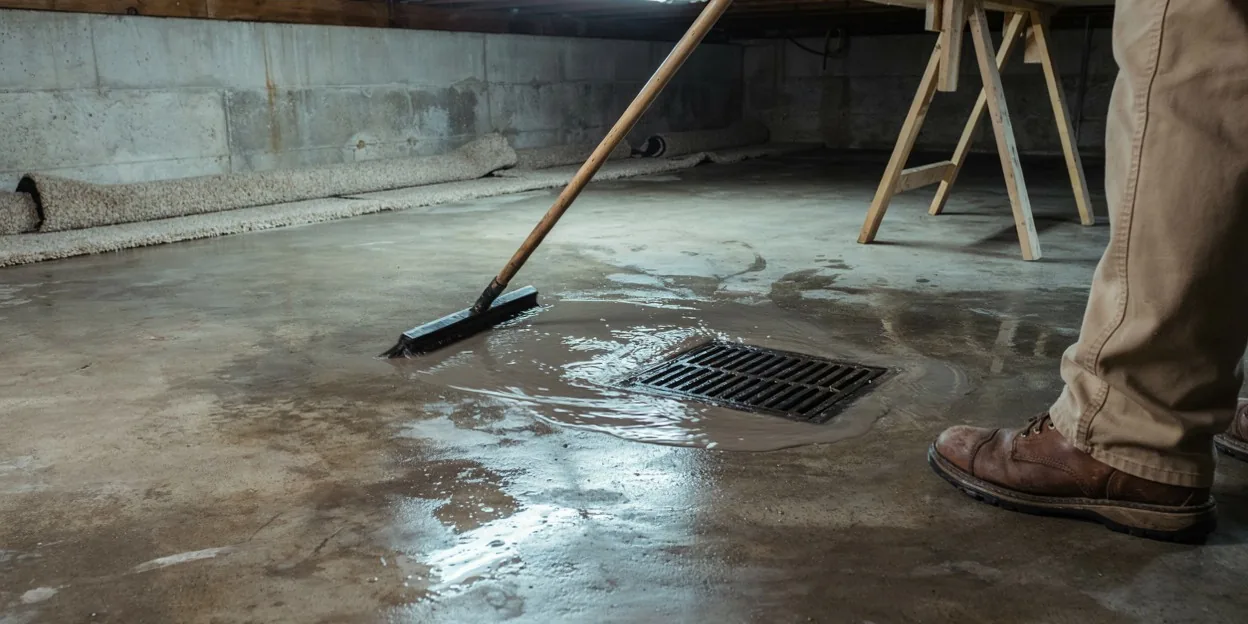
You carried a basket down to the basement and felt the carpet give under your foot. There is no puddle, just a dark line along the back wall where the yard slopes toward the house, and the room smells like a wet towel. This site connects you by phone with an independent local provider who does basement flooding cleanup in Woodstock and across Cherokee County.
Finding the wet wall behind the finished wall
The crew starts by working out how the water got in. Rain that came through the buried wall of a daylight basement is one job. A sump pit that overflowed when the pump lost power in a storm is another. A water heater or a supply line in the utility room is a third, and it is the only one with a valve to close.
Then they meter the bottom foot of every wall, the carpet, and the pad under it, working the whole perimeter rather than the corner that looks wet. In a finished basement the framing and insulation behind the drywall hold water the room never shows. The readings mark where the drywall opens and where it dries in place. Standing water gets extracted, wet pad comes out, and air movers and a dehumidifier go in on a plan.
The hour before the truck backs down the driveway
If the water is from a pipe or a tank, close the valve. If it came through the wall, there is nothing to close, so leave it. Kill power to the basement if any outlet, the pit cord, or the furnace is near the water. Carry boxes, rugs, and anything sitting on the floor upstairs.
Photograph the water line on the wall, the carpet, and the base of the stairs before anything is moved. Do not pull the carpet or the baseboard yourself; the crew needs to meter them in place. Then call.
Carpet pad leaves, framing usually stays
Carpet pad that took on water comes out almost every time, because it never dries evenly and holds water against the slab. Carpet itself can sometimes be dried and relaid if the water was clean. Drywall that wicked from the floor is cut a foot or two up, above the highest wet reading, and the studs and plate behind it dry with air moving through the cavity. If the water came off the yard or through a floor drain, the drywall and insulation it touched are treated as contaminated and removed, which is the same rule that applies in flood cleanup.
Once the bulk water is gone, the job becomes structural drying, with readings taken daily until the slab, the framing, and the remaining drywall reach their target.
Daylight basements on the downhill side of a Cherokee County lot
Most of the two-story houses built in Towne Lake, Eagle Watch, BridgeMill, and the newer streets off Hickory Flat Highway since the late 1980s sit on sloped red clay lots with a daylight basement cut into the grade. The buried wall faces uphill, and the clay behind it sheds a hard rain instead of absorbing it. Water that should run around the house runs into the wall instead, and the block or poured wall lets it through at the cove joint where the wall meets the slab.
Storms here come in bunches. The September 2009 rains that shut Interstate 575 at Noonday Creek filled basements from Woodstock to Canton, and Tropical Storm Zeta on October 29, 2020, knocked out power for a large share of the county, which is when sump pumps stop. A summer of humid air keeps whatever got wet from drying without help. Ask the crew to photograph the cove joint and log the wall readings, since the basement wall is the part of the house an adjuster will ask about first.
Calling about a basement that took on water
Have the neighborhood name ready and say whether the water came through the wall, from the pit, or from a pipe, whether the basement is finished, and whether the power is still on down there. Say how long the carpet has felt wet. Call (770) 697-0510.